 Image 1 of 3
 Image 2 of 3
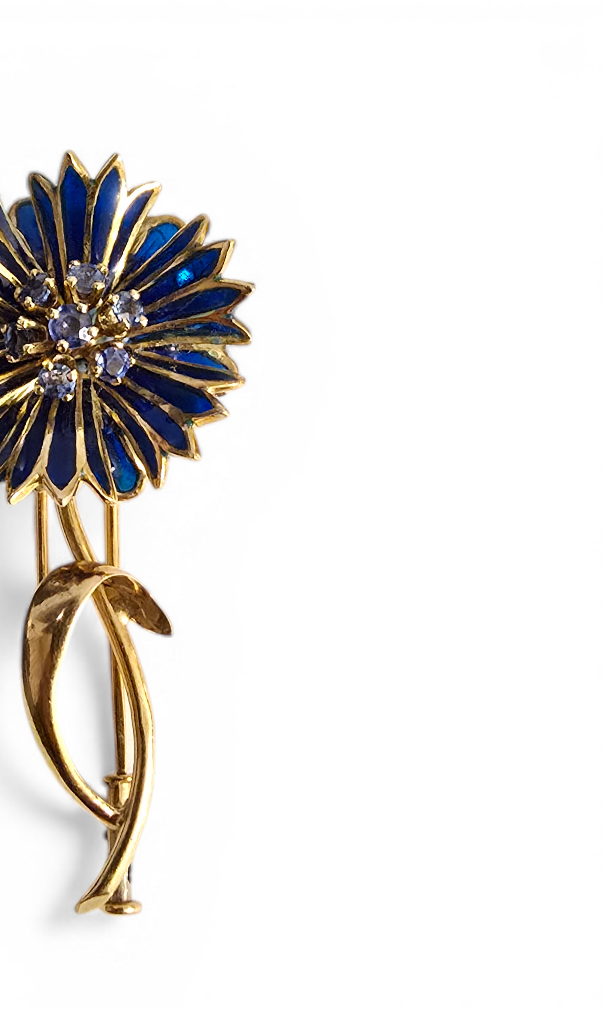 Image 3 of 3
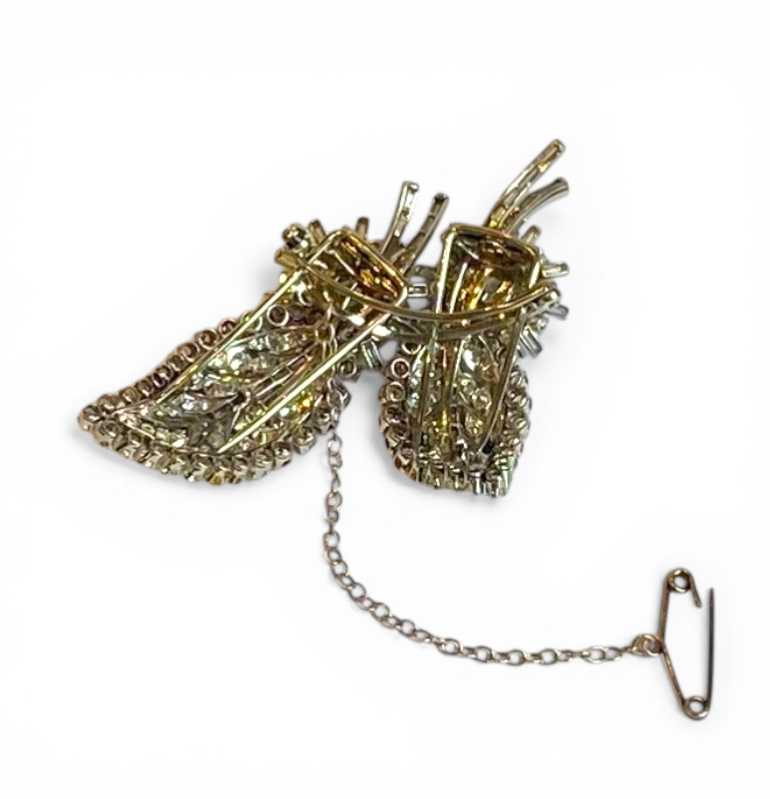
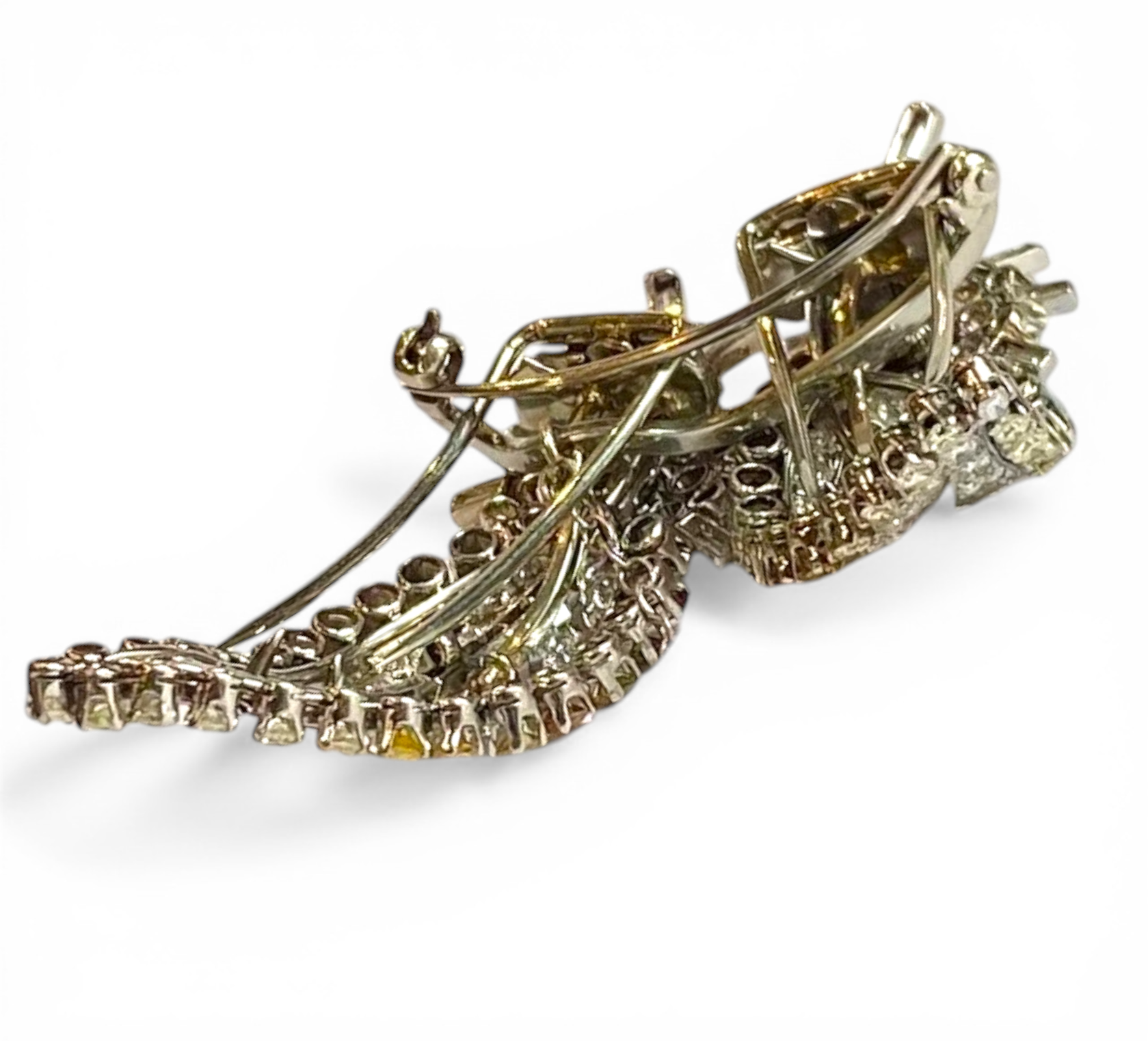
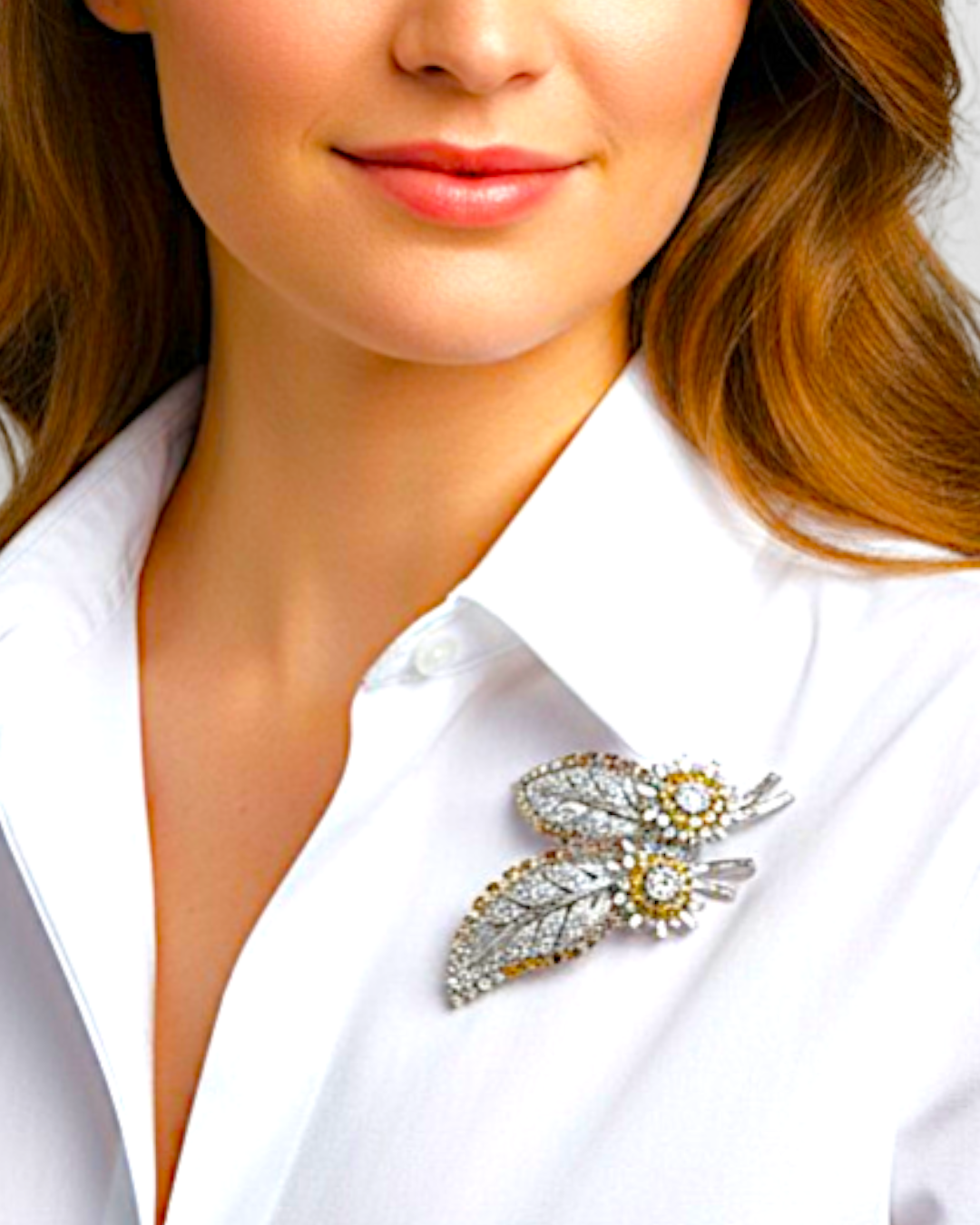
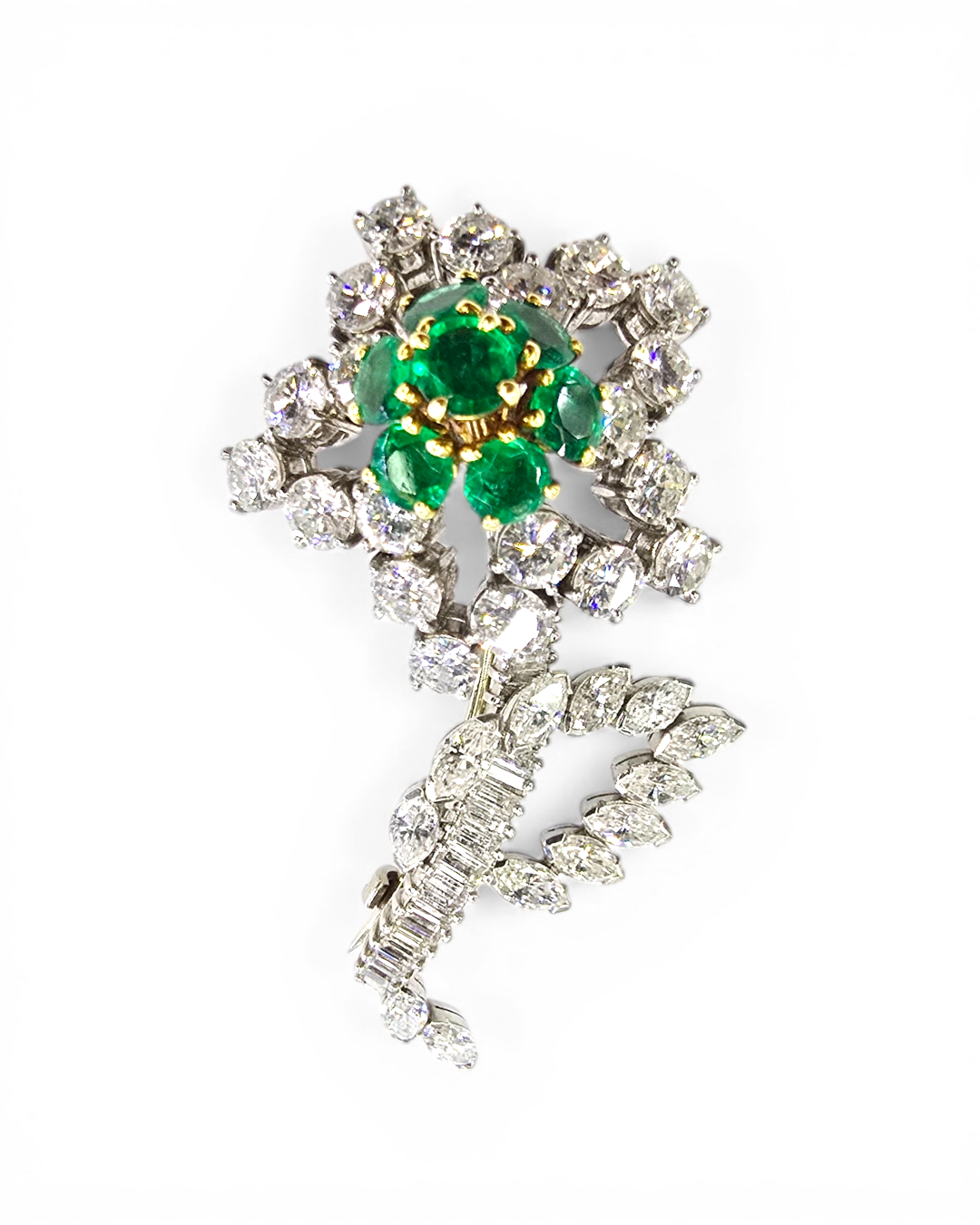
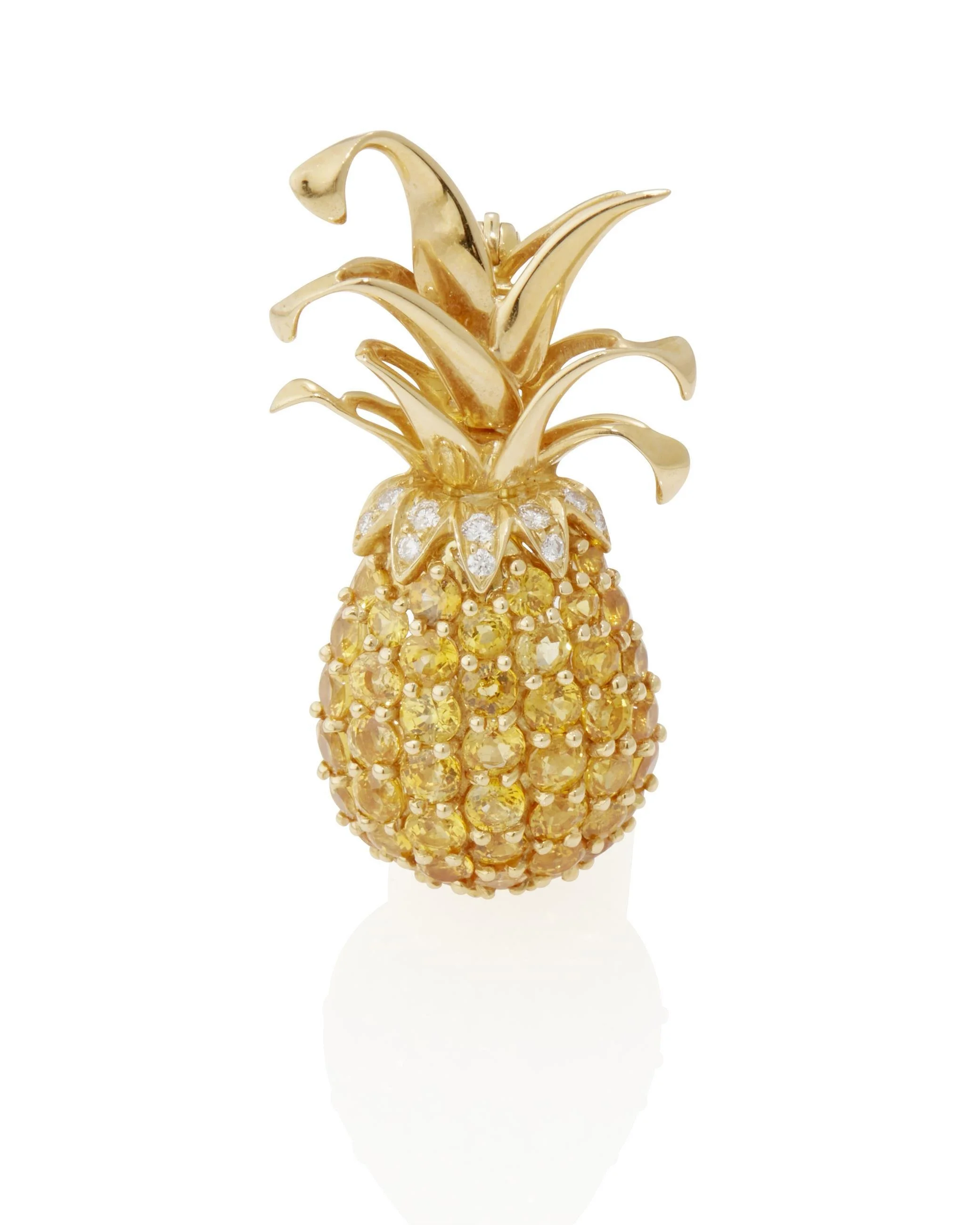
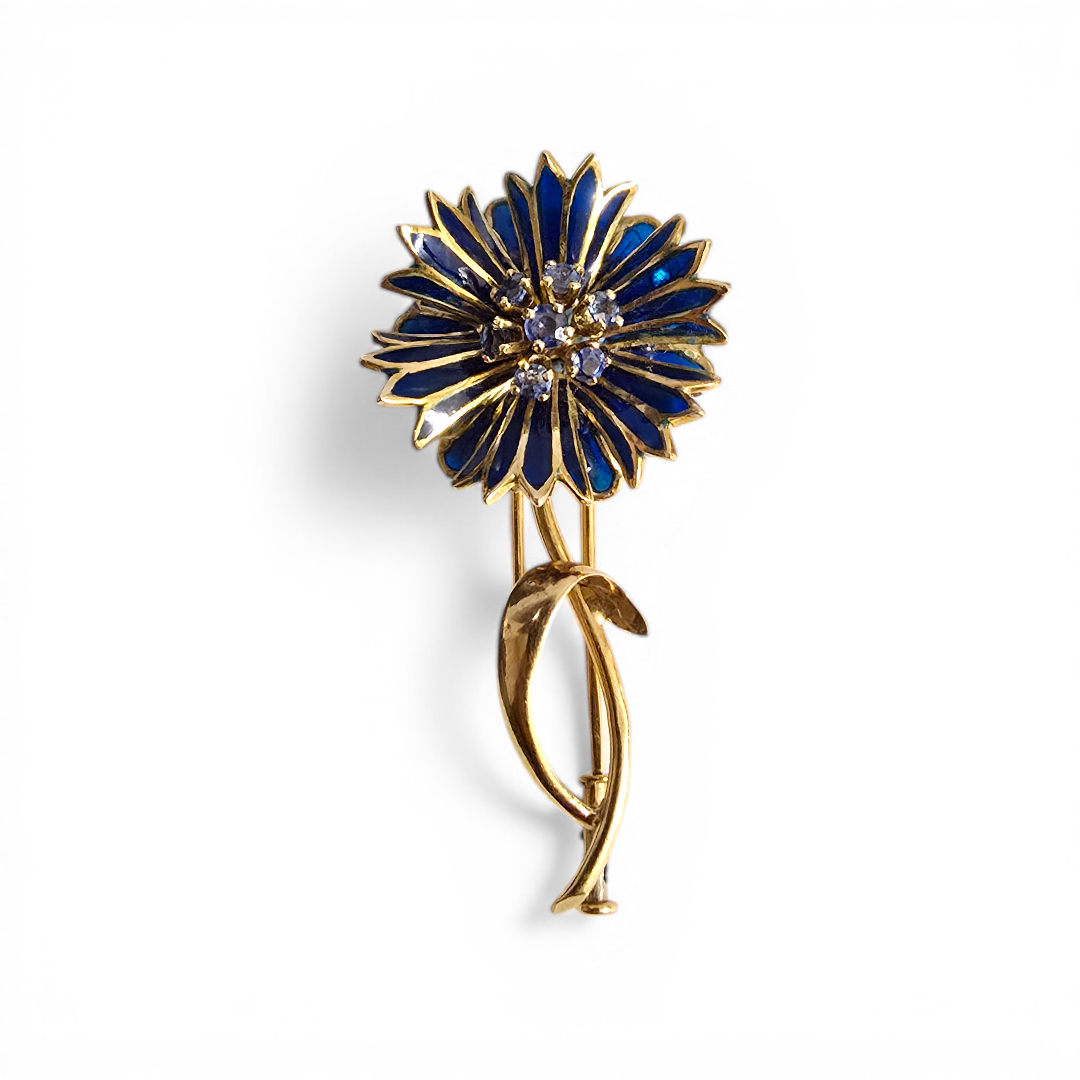
18k gold flower brooch set with round sapphires and the petals in plique-a-jour vitreous enamel. France 1960’s Signed, French marks. 9.95 grams, 2.5×5 cm
Plique-à-jour enamel is a luminous, open-work enameling technique that produces glass-like, translucent panels set within a metal framework—resembling miniature stained glass. Each cell is formed by soldering a fine metal filigree or creating a network of cloisons, then firing powdered enamel without a backing so light can pass through the finished surface. The result is exceptional depth, vibrancy, and a jewel-like translucency that changes with angle and illumination.
Historically prized by Art Nouveau and late 19th–early 20th century makers, plique-à-jour requires extraordinary skill and patience: fragile enamel must withstand multiple firings and careful support removal, making high-quality examples rare and collectible. In fine antique and vintage jewelry, plique-à-jour is most often seen in floral motifs, wings, and delicate decorative panels, where its luminous effect enhances color and movement.
For collectors, plique-à-jour pieces offer distinctive visual drama and technical rarity. Condition is critical—look for intact, evenly fired enamel without cracks, losses, or unstable fillings, and examine the metal framework for repairs. Well-preserved examples are highly desirable as heirloom objects and museum-quality statements of craftsmanship.
18k gold flower brooch set with round sapphires and the petals in plique-a-jour vitreous enamel. France 1960’s Signed, French marks. 9.95 grams, 2.5×5 cm
Plique-à-jour enamel is a luminous, open-work enameling technique that produces glass-like, translucent panels set within a metal framework—resembling miniature stained glass. Each cell is formed by soldering a fine metal filigree or creating a network of cloisons, then firing powdered enamel without a backing so light can pass through the finished surface. The result is exceptional depth, vibrancy, and a jewel-like translucency that changes with angle and illumination.
Historically prized by Art Nouveau and late 19th–early 20th century makers, plique-à-jour requires extraordinary skill and patience: fragile enamel must withstand multiple firings and careful support removal, making high-quality examples rare and collectible. In fine antique and vintage jewelry, plique-à-jour is most often seen in floral motifs, wings, and delicate decorative panels, where its luminous effect enhances color and movement.
For collectors, plique-à-jour pieces offer distinctive visual drama and technical rarity. Condition is critical—look for intact, evenly fired enamel without cracks, losses, or unstable fillings, and examine the metal framework for repairs. Well-preserved examples are highly desirable as heirloom objects and museum-quality statements of craftsmanship.